
Can a wooden table be placed outside?
Wooden table outdoors: tips, mistakes to avoid, and maintenance advice
Placing a wooden outdoor table on your terrace or in your garden is a great way to bring the natural warmth of wood into a convivial, elegant, and timeless setting. But can you really leave wood exposed to the elements without risking damage? Between UV rays, rain, humidity, and even frost, outdoor conditions put this living material to the test.
In this article, we answer the most frequently asked questions on the subject. How do you choose the right wood species and suitable base? Which treatments are essential to protect a wooden table from rain and sun? What maintenance habits should you adopt to help it last over time? Through VitaDeco’s expertise, we share all our advice to help you make the right choice and fully enjoy your wooden furniture, even outdoors.
Which wood is best for an outdoor table?
Which wood species are the most resistant outdoors?
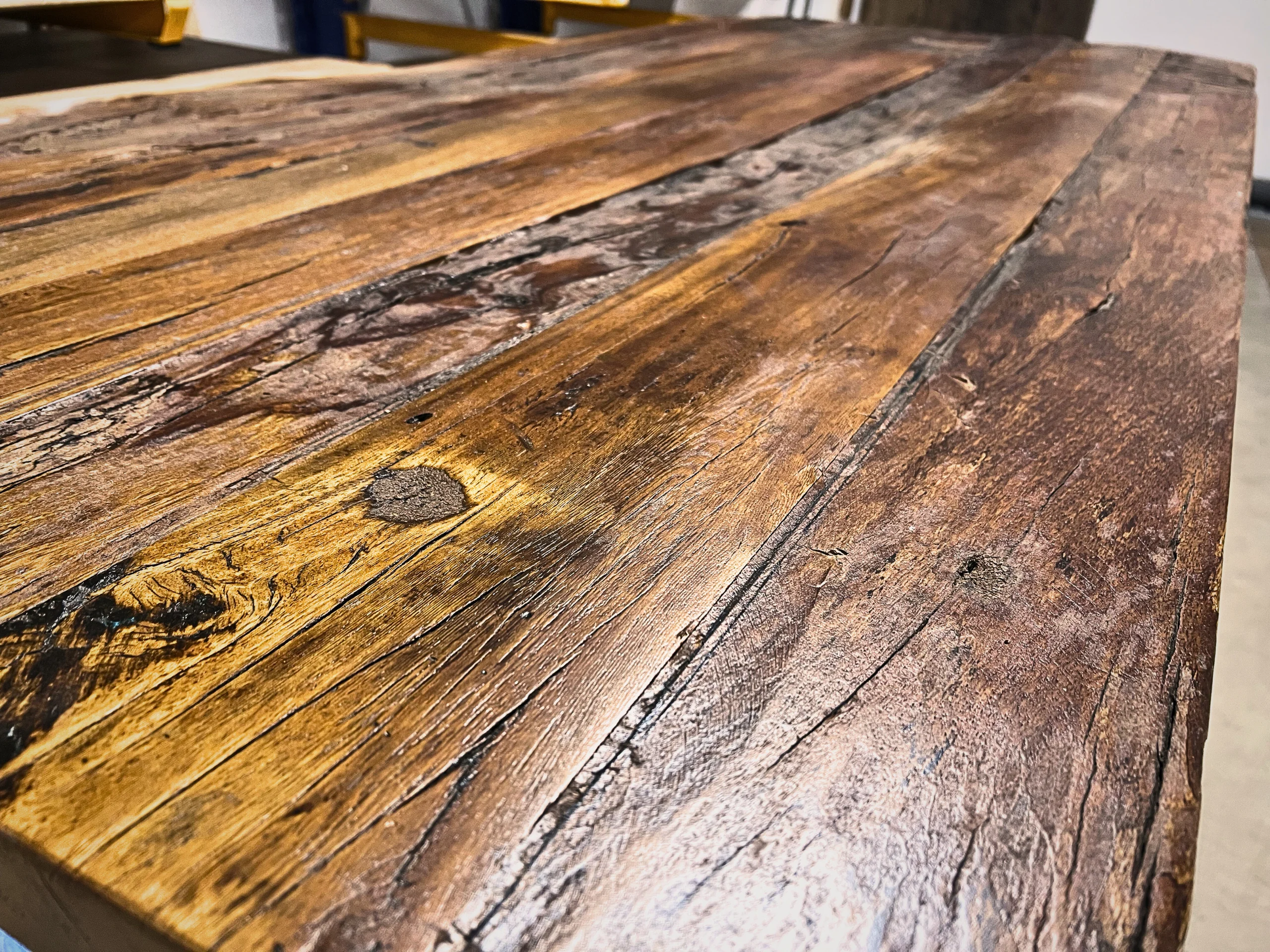
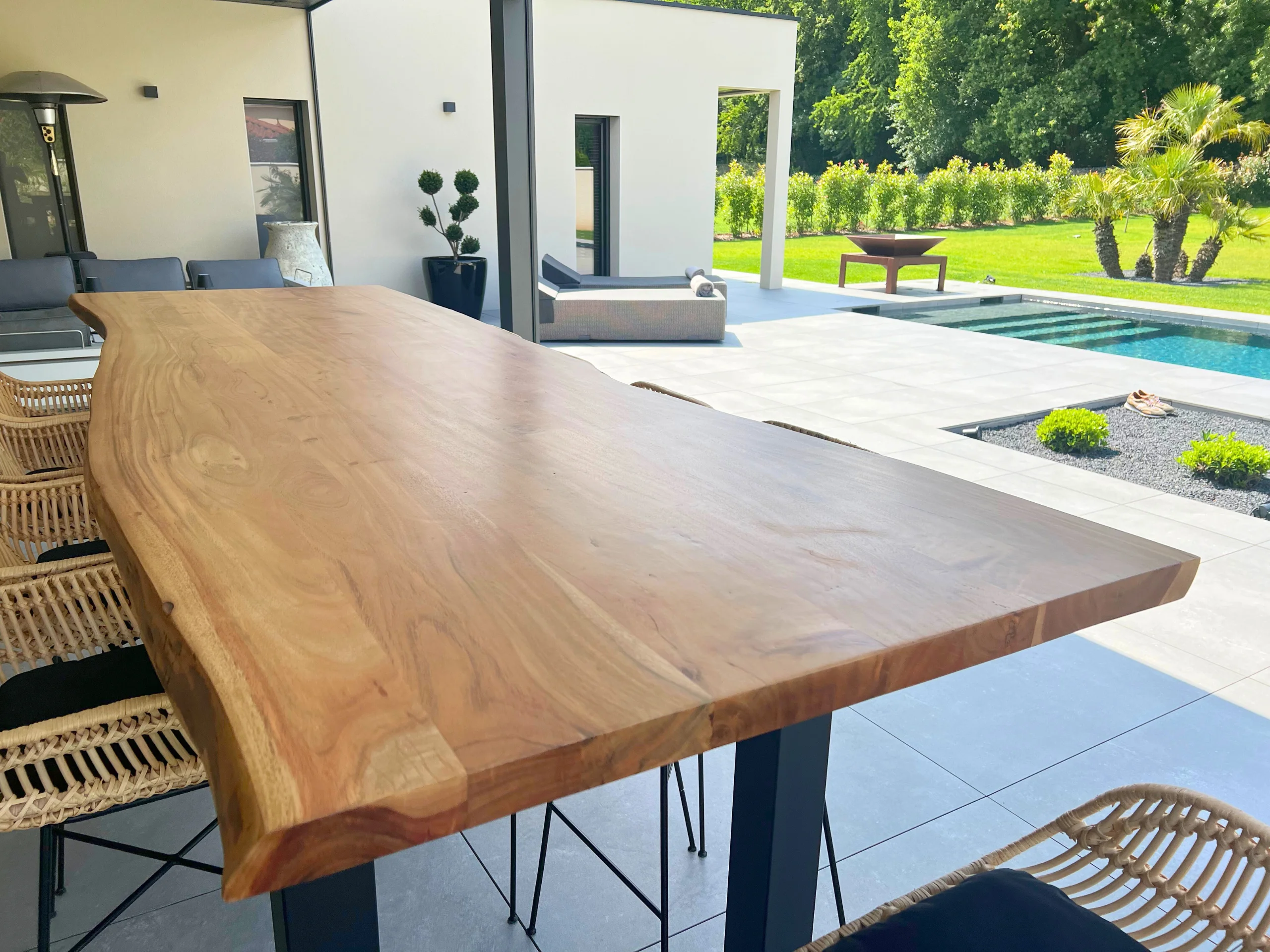
Choosing the right wood species for outdoor use is essential to ensure the durability of your table. At VitaDeco, we only work with woods that are dense and resilient enough to withstand changing weather conditions. Oak, mango wood, acacia, and reclaimed wood are all excellent options for a wooden table on a terrace or in a garden, provided they are properly protected. For more information, take a look at our article: Which wood should you choose for your table?
These wood species naturally offer good resistance to moisture, insects, and outdoor wear. That said, no wood can remain outdoors without maintenance, especially when used as a tabletop.
Woods to avoid outdoors
On the other hand, certain woods should be avoided for outdoor use, particularly softwoods such as pine, fir, and spruce. They are softer, less dense, and especially prone to warping, cracking, and swelling when exposed to changes in humidity.
In addition to their lower mechanical strength, these woods can quickly lose their visual appeal, with wide grain patterns, prominent knots, and a tendency to turn grey over time. That is why we do not offer any softwood species at VitaDeco.
Which table base should you choose for outdoor use?
Why wood or cast iron can be problematic outdoors
When choosing a solid wood outdoor dining table, the tabletop is not the only element to consider: the base plays a crucial role in the durability and stability of the entire piece.
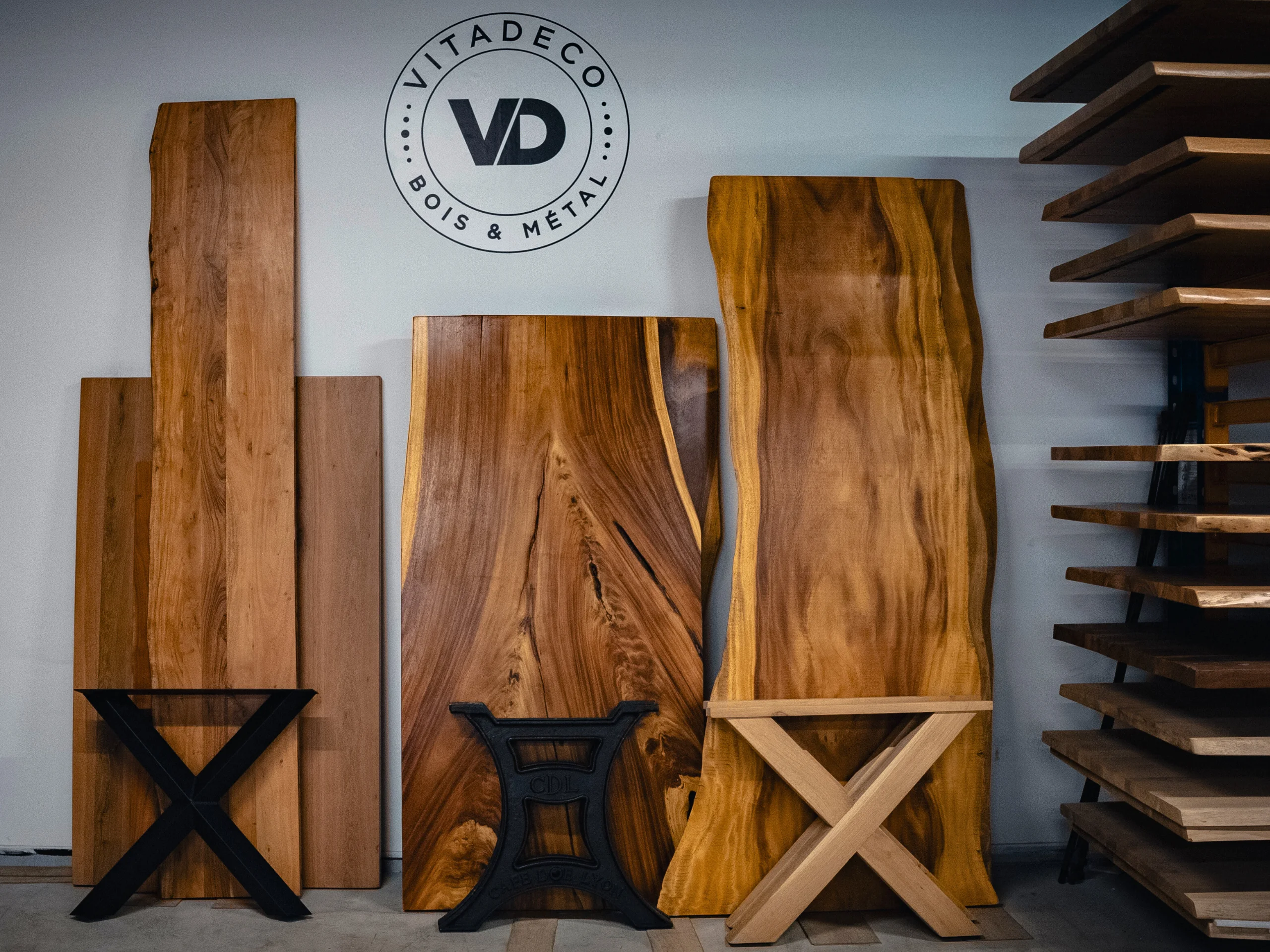
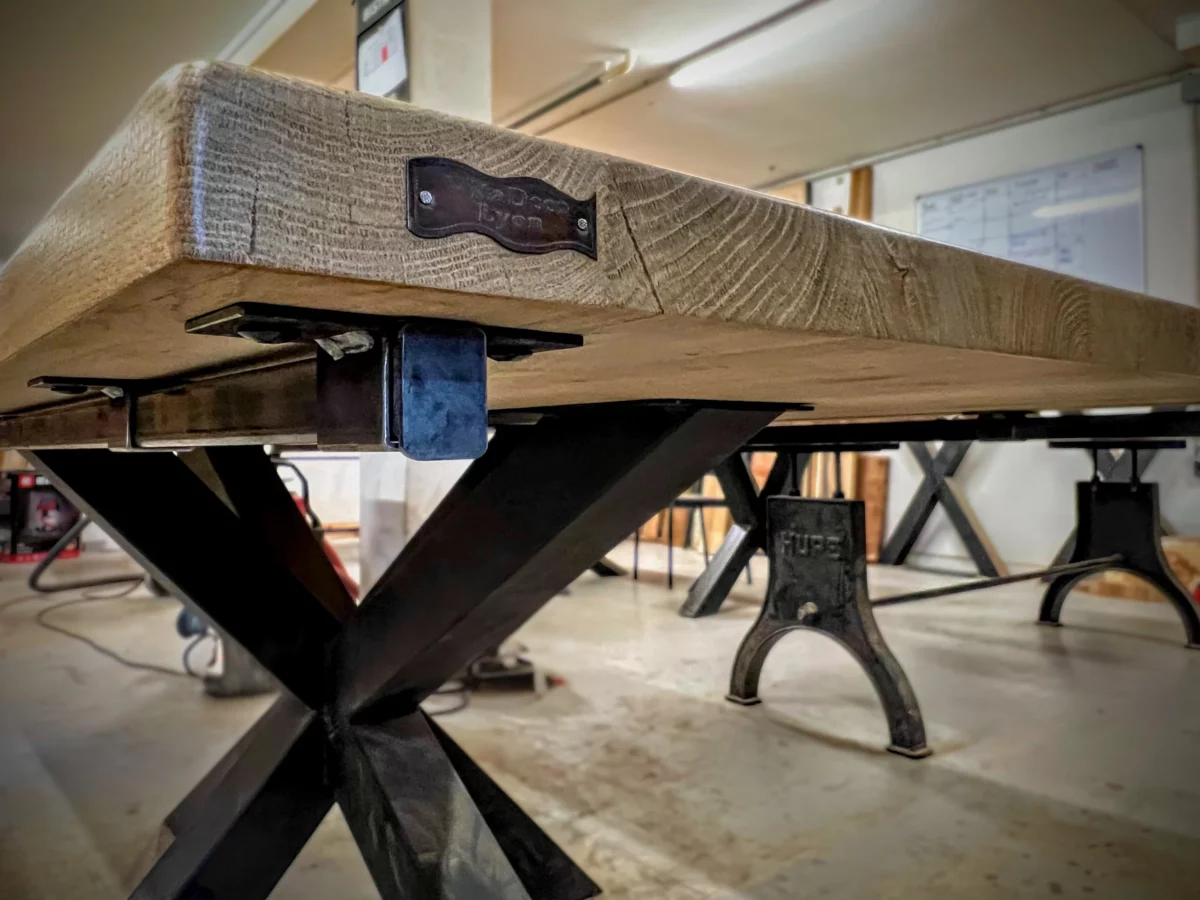
A wooden base is often poorly suited to outdoor use. Not only does it require significant maintenance, but it can also absorb moisture through capillary action and transfer it to the tabletop, which may compromise its longevity. As for cast iron, although it is highly robust, it tends to rust, can react to temperature fluctuations over time, and may leave oxidation marks on your terrace flooring.
The benefits of steel with an epoxy coating
At VitaDeco, we recommend using powder-coated steel table bases for outdoor use. This material offers excellent mechanical strength while maintaining a clean and elegant aesthetic. All our bases are protected with an epoxy coating, which creates an effective barrier against moisture and helps prevent rust from forming.
Painted steel integrates perfectly into a custom-made design and offers great stylistic freedom: a Cross base, Spider base, U-shaped base, or a central base, depending on your needs and the available space.
Protecting a wooden table from rain, sun, and the elements
What are outdoor tabletops most vulnerable to?
Wood is a living material. When exposed outdoors, it faces the combined effects of rain, UV rays, frost, temperature fluctuations, and persistent humidity. These elements accelerate the aging process of the tabletop and can lead to cracking, premature greying, or even the deterioration of protective finishes.
That’s why it’s essential to protect an outdoor wooden table with the right care and the right products from the very beginning.
Wood oil, stain, or varnish: which should you choose?
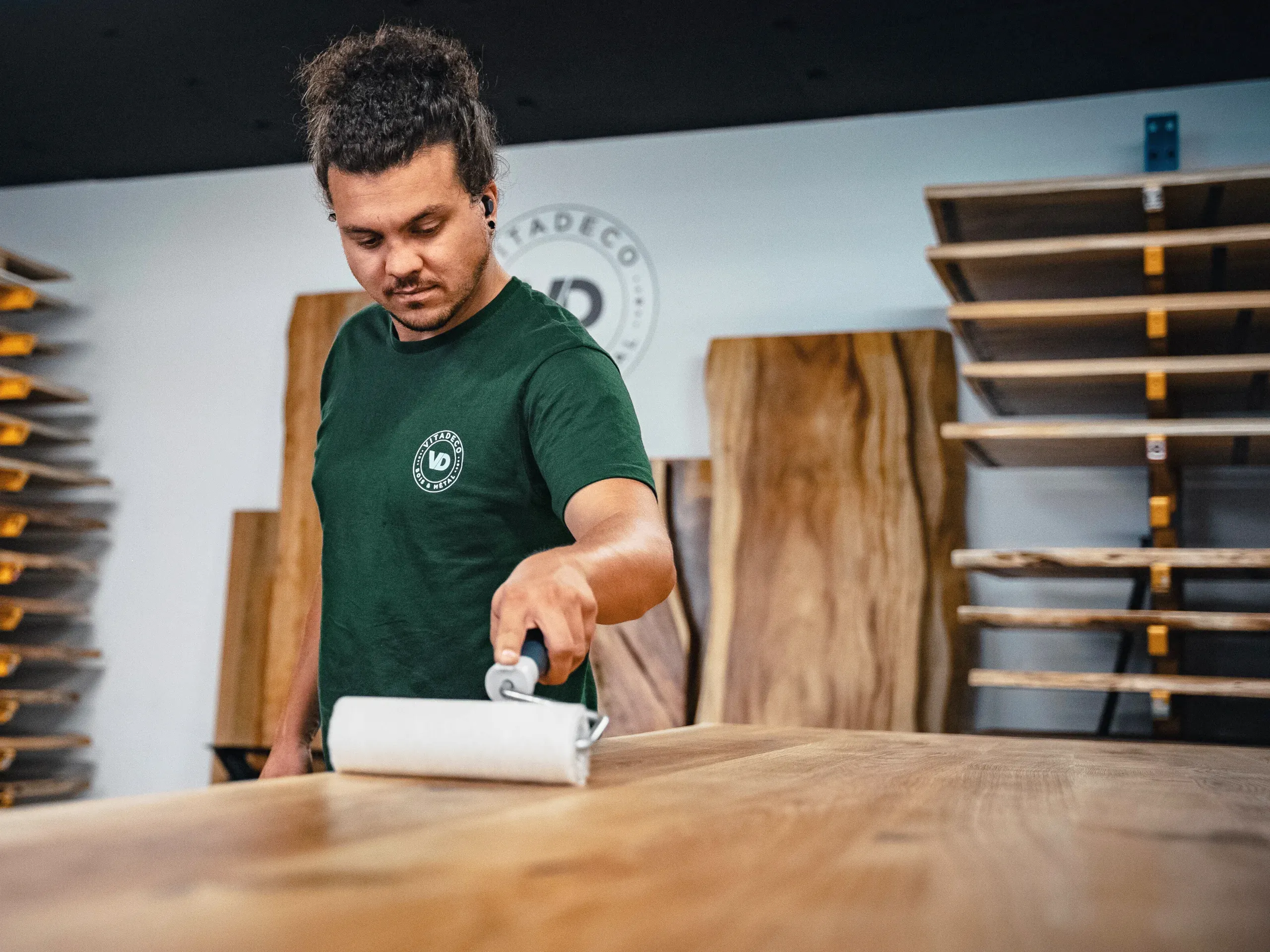
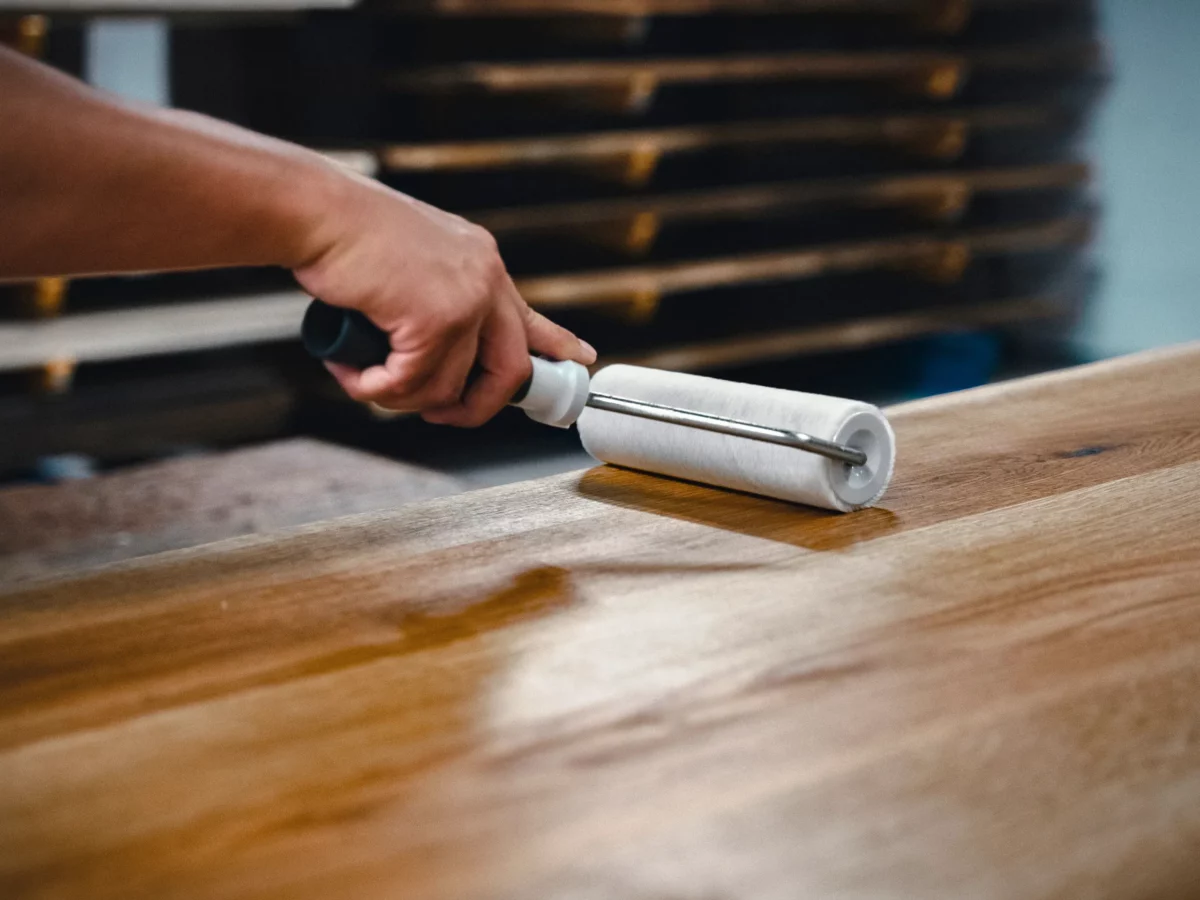
Contrary to popular belief, a varnish is not suitable for outdoor use. It creates a film on the surface that prevents the wood from breathing, which can lead to blistering or mould growth over time. At VitaDeco, we apply a wood saturator whenever we know a tabletop is intended for outdoor use.
A wood saturator penetrates deep into the timber, protecting it against moisture, UV rays, fungi, and greying. It preserves the natural appearance of the wood thanks to its matte finish and tones that remain close to the original colour. For a tabletop that is already installed, a high-quality exterior wood stain can also be a suitable option, provided that drying times and application conditions are carefully followed.
Maintenance frequency and the right care throughout the seasons
Proper outdoor wood table maintenance starts with prevention:
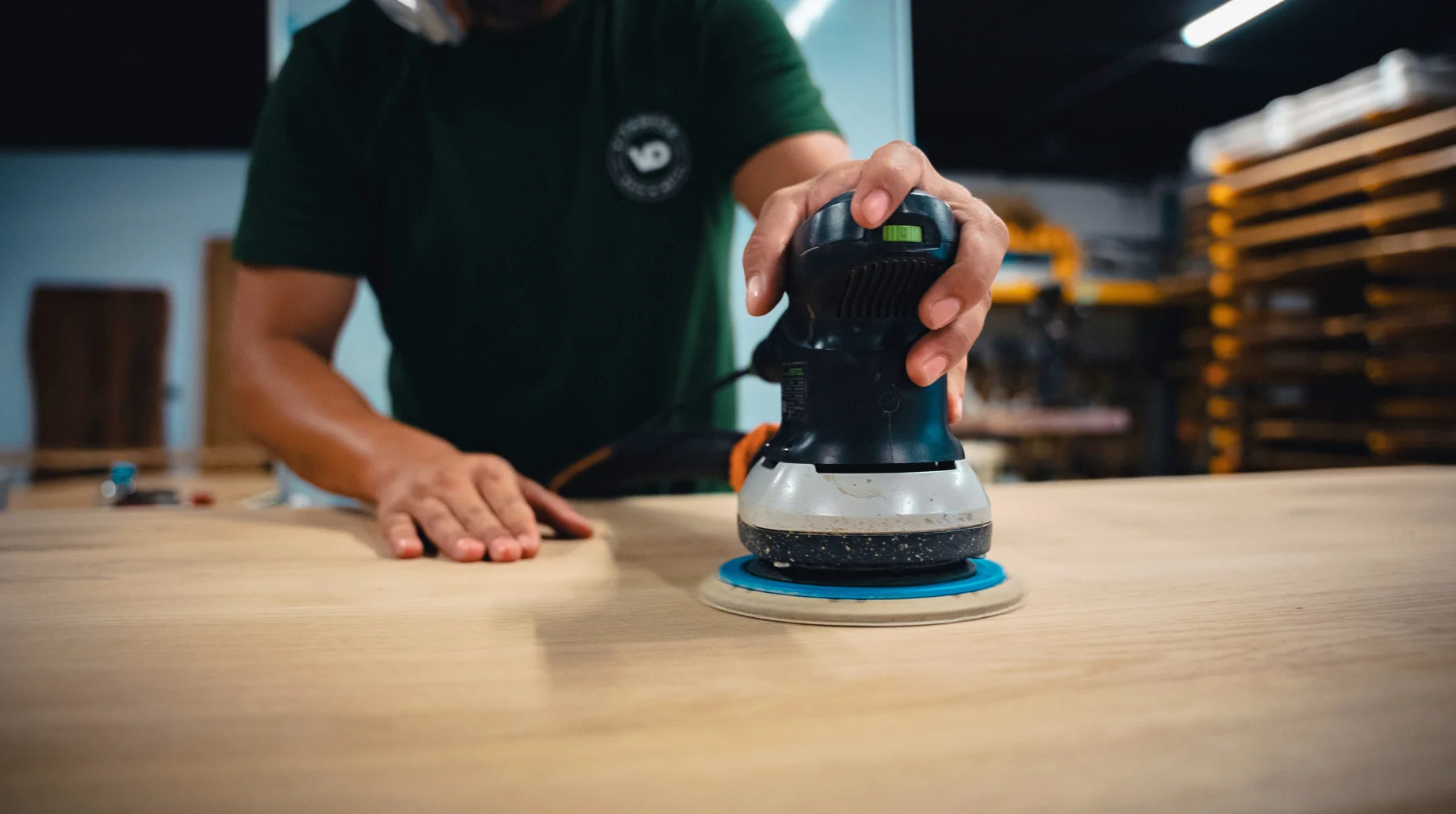
- At the beginning of the season, lightly sand the surface with 80-grit sandpaper, then apply a coat of wood saturator.
- At the end of the season, thoroughly clean the tabletop, then apply a single coat of wood saturator to reinforce protection before winter.
Ideally, you should protect the table with a pergola or an overhang, but even without shelter, regular maintenance will help preserve its appearance and durability for many years.
Can you use an untreated wooden table outdoors?
Why treatment is essential
One question we are often asked is: can you use a wooden table outdoors without treating it? The answer is simple: absolutely not. A raw wood tabletop placed outdoors without proper protection will quickly be damaged by the elements. It absorbs moisture, warps, cracks, and can even become a breeding ground for fungi and mould.
At VitaDeco, when we know a table will be used outdoors, we completely adapt the finish accordingly:
- The tabletop is carefully sanded, just as we do for our indoor models,
- But instead of a varnish, we apply a specialized outdoor wood saturator.
The role of a wood saturator
A wood saturator is a technical product designed to protect wood from the elements, UV rays, greying, and fungal growth. Unlike a film-forming varnish, it penetrates deep into the wood and allows the fibres to breathe. This helps preserve the material’s natural appearance while extending its lifespan.
It is this approach that allows us to create designer outdoor wooden tables with a refined, durable, and welcoming finish. By choosing the right treatment from the start, you not only protect your tabletop but also preserve the natural beauty of the wood throughout the seasons.
Durability and lifespan of an outdoor wooden table
What accelerates aging?
The lifespan of an outdoor wooden table depends on several factors: exposure to sunlight, weather conditions, the quality of maintenance, and the type of protection applied. In an unsheltered outdoor environment, a table is subjected to greater temperature fluctuations, humidity, and UV exposure, which gradually weakens the tabletop, even when it is made from solid wood.
Without maintenance or shelter, the table may turn grey, develop cracks, or lose some of its stability. On the other hand, with a few simple and regular care routines, it is perfectly possible to preserve it for many years.
How to extend its lifespan?
Here’s how to maintain a wooden table on your terrace to help it last for years:
- Clean the surface regularly to prevent the buildup of moisture, dirt, or organic residue.
- Lightly sand the tabletop once a year to refresh the wood fibres and ensure proper absorption of the protective treatment.
- Apply a suitable wood saturator at the beginning and end of each season.
- Ideally, place the table under a partial shelter, such as a pergola, overhang, or shade sail.
This type of maintenance helps both preserve a beautiful finish and slow down the natural aging of the wood. Over time, a natural patina may even develop, giving your table authentic character without compromising its durability.
Should you bring your table indoors for winter or simply cover it?
The risks of moisture and condensation
When temperatures drop and humidity increases, even a well-protected table can suffer if it is stored improperly. Many people assume that a simple cover is enough to protect outdoor furniture. In reality, however, placing a cover directly on the tabletop encourages condensation, which can lead to mould, stains, and warping of the wood.
If you cannot bring your table indoors, it is essential to:
- Raise it slightly off the ground to avoid direct contact with damp surfaces.
- Place a rigid cover (such as a wooden board or panel) above the tabletop.
- Allow air to circulate beneath the cover to prevent moisture from becoming trapped.
How to protect your table properly during winter?
The best solution is to store the table in a sheltered place, such as a garage, garden shed, or a well-ventilated basement. If that’s not possible, proper physical protection combined with end-of-season maintenance will help minimize the effects of cold weather.
Before winter storage:
- Carry out a light sanding if necessary,
- Apply a protective treatment (such as a wood saturator) to nourish the wood and prepare it for moisture exposure.
This extra care helps maximize the effectiveness of the outdoor wood finish while making the table easier to bring back into use when spring arrives.
Which tabletop shape and thickness should you choose?
The advantage of thick tabletops
When choosing an outdoor wooden table, most people focus on the wood species and the base. However, the thickness of the tabletop also plays an important role in its ability to withstand outdoor conditions.
At VitaDeco, we typically use tabletops that are around 5 cm thick, ensuring greater stability and long-term durability, even when exposed to humidity or temperature fluctuations over extended periods. A thinner tabletop is more likely to warp or crack over time, especially if the wood has not been properly prepared for outdoor use.
Shapes and stability outdoors
When it comes to shape, there is no single “wrong choice,” but some designs are better suited to outdoor use. A rectangular or oval shape, for example, provides good weight distribution and allows rainwater to drain away more easily.
Pairing a sufficiently thick tabletop with a sturdy, well-secured base ensures an outdoor table that is strong, functional, and visually appealing.
In summary: our tips for choosing the right outdoor wooden table
✔️ Pour bien choisir votre table d’extérieur en bois design, gardez en tête ces essentiels :
- Choose dense and durable wood species, such as oak, mango wood, acacia, or reclaimed wood.
- Avoid softwoods, as they are too fragile and poorly suited to outdoor conditions.
- Choose a powder-coated steel base, which is durable and easy to maintain.
- Always treat the tabletop with a wood saturator specifically designed for outdoor use.
- Plan for seasonal maintenance: a light sanding followed by the application of a protective treatment.
- Protect the table during winter by covering it properly or storing it indoors whenever possible.
- Choose a thick tabletop (at least 4–5 cm) for greater stability and long-term durability.
- Opt for a simple and functional shape that can better withstand changing weather conditions over time.
With these precautions, your wooden table can enhance your outdoor space for many seasons to come, while preserving its natural beauty and character.
Choose an outdoor wooden table with VitaDeco
At VitaDeco, every outdoor wooden table project is designed with careful attention to detail, taking into account your preferences, your environment, and how you plan to use it. We guide you through the choice of tabletop, base, finish, and protective treatment to create a piece that is both beautiful, durable, and perfectly suited to your space.
Our workshop, located in Saint-Pierre-de-Chandieu near Lyon, welcomes you by appointment to discover the different wood species, tones, shapes, and possible combinations. Whether you’re looking for a table for a sheltered terrace or a true outdoor dining table, we advise you with care, expertise, and passion.
Each table is custom-made, using carefully selected materials chosen for their quality, and crafted with great attention to detail in partnership with our skilled artisans.
👉 Envie d’en discuter ? Contactez-nous ou venez nous rencontrer à l’atelier pour imaginer ensemble votre future table de caractère.

Hello
Puis je utiliser un saturateur pour ma table en teck qui est dehors en permanence été comme hiver et qui a 23 ans
Et quel saturateur ?
Je la ponce et la nourrit 1 fois/an avec de l’huile de teck qui ne teinte que quelques mois
Merci pour vos conseils
Sincerely
Bonjour Richard,
Oui, vous pouvez tout à fait utiliser un saturateur pour protéger votre table en teck, et c’est même souvent une solution plus durable que l’huile de teck classique.
L’huile nourrit le bois, mais elle reste assez peu résistante aux UV et aux intempéries, ce qui explique pourquoi la teinte ne tient que quelques mois. Un saturateur, lui, pénètre dans le bois et offre une protection plus stable contre l’eau, le soleil et les variations climatiques, tout en évitant l’effet film en surface.
Avant l’application, je vous conseille de :
Pour le produit, vous pouvez regarder des saturateurs extérieurs de marques reconnues comme Blanchon, Owatrol ou Syntilor, qui proposent des versions adaptées aux bois exotiques comme le teck.
Même avec un saturateur, un entretien léger une fois par an reste généralement suffisant pour garder un beau rendu.
Bonne rénovation de votre table, et bravo à elle pour ses 23 ans de service en extérieur !