

How to Varnish a Wooden Table for Durable Protection?
Why a varnish for a wooden dining table?
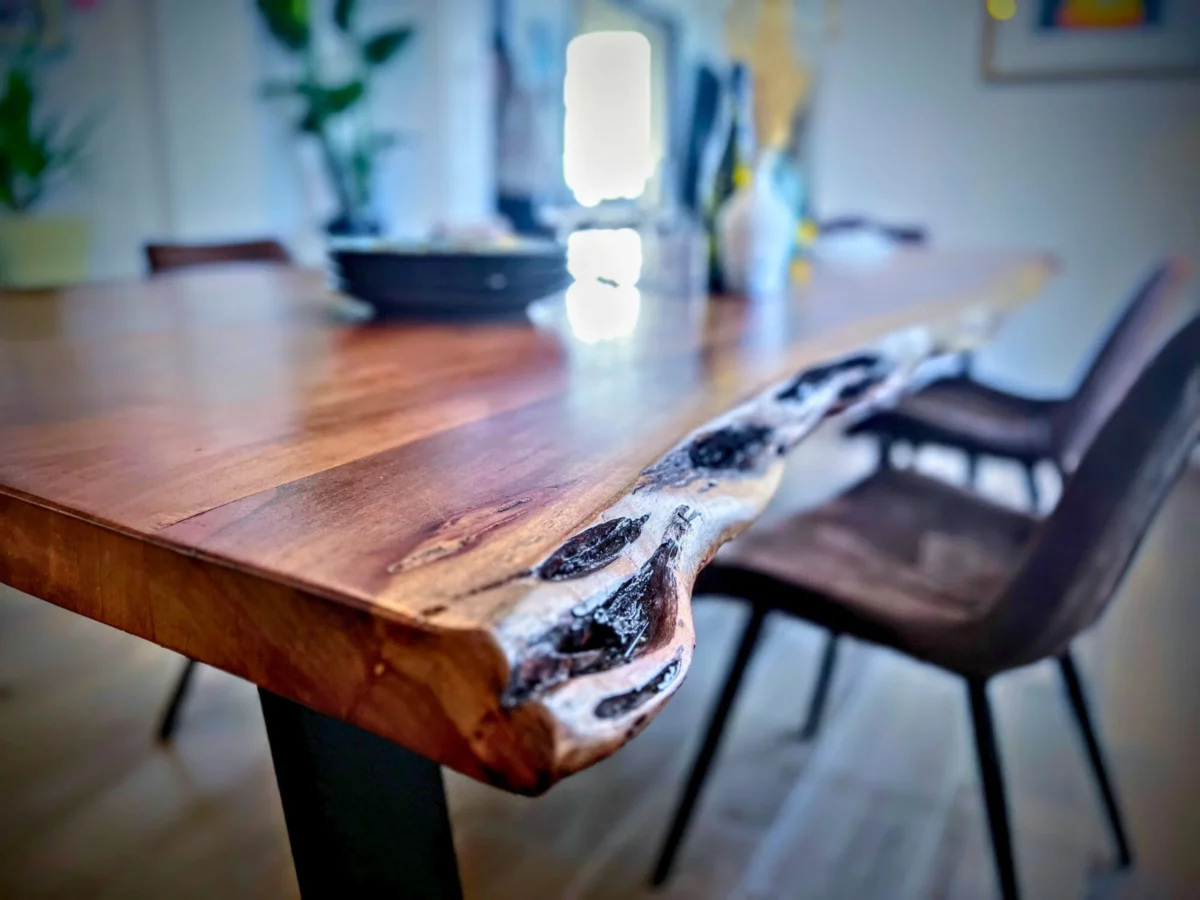
The Varnish for dining table is essential for preserving the durability and aesthetics of wood. By forming a protective barrier, it effectively prevents stains, scratches, and moisture infiltration. But that's not all: it also enhances the natural grain wood. In addition to extending the life of your table, this finish offers a smooth and elegant visual result, which enhances the tint and the nuances solid wood. And whether it's for a table in oak, in acacia or in mango tree. Vitrification preserves the natural appearance of wood while offering it durable everyday protection.
By choosing this technique, you opt for a practical, easy-to-maintain solution, while guaranteeing optimal resistance in the face of frequent use and everyday hazards.
What is wood vitrification?
The wood vitrification is a finishing technique that consists of applying a protective product to the surface of the wood. This process creates a resistant and waterproof layer. This effectively protects the wood from external damage such as water, stains, and scratches.
Ideal for Solid wood tables, vitrification preserves the natural aesthetic of wood while making it more resistant to everyday use. Unlike other finishes, it creates a protective film without altering the texture or the beauty of the wood grain. In addition to being water repellent, the varnish for dining tables improves the durability of furniture by extending its lifespan. For tables, which are often subjected to demanding conditions, this technique guarantees both protection and elegance.
Why would you varnish an oak or acacia table?
Vitrification offers particularly interesting advantages for species like oak and the’acacia. These are woods known for their robustness and natural beauty. Varnishing an oak or acacia table strengthens their protection against the elements while preserving their authentic appearance.
Thanks to its properties water repellents, ..., vitrification creates an impermeable barrier. Therefore, it protects the wood from liquids, stains, and moisture. This is crucial for a dining table, which is subjected to spills and accidents daily. Additionally, this process increases the wood's durability, reducing the risk of scratches and premature wear, while enhancing the natural grain of these noble species. Depending on the wood species you have chosen, it is important to select a Varnish for dining table adapted. Undecided on which wood essence to choose for your table? Consult our guide What wood to choose for your dining table.
In summary, a dining table varnish ensures preserved aesthetics, combined with a best resistance over time, while making daily maintenance easier.
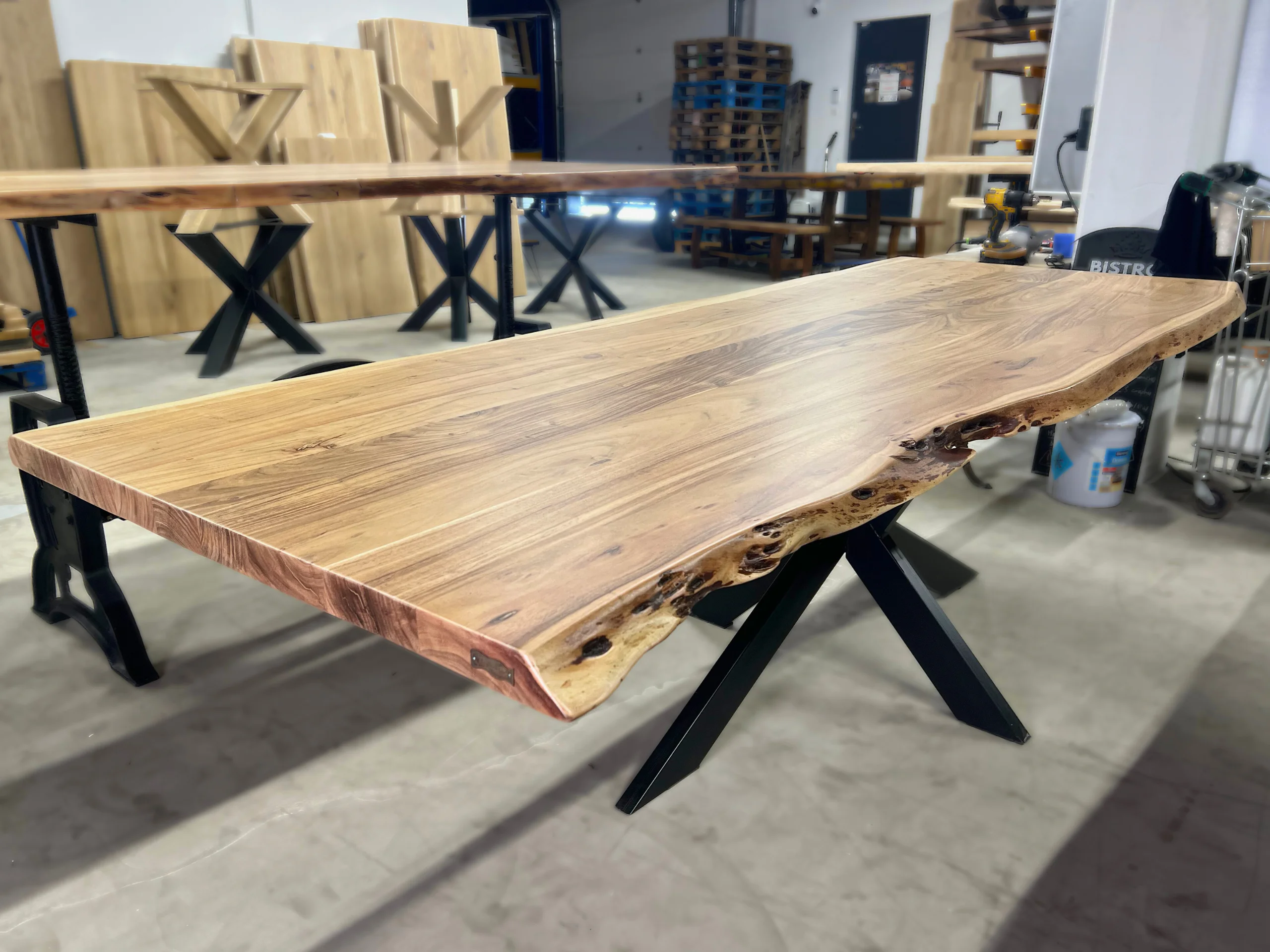
How to varnish a wooden table: The step-by-step guide
1/ Sanding wood
Sanding is an essential step in the varnishing of a wooden table. It prepares the surface by removing irregularities and sanding the wood to ensure an even application of the varnish. Use fine-grit sandpaper, such as 120 grit. This way, you can avoid damaging the wood while creating a perfectly smooth surface. Sanding should be done along the grain of the wood to preserve its natural appearance. Once sanding is complete, carefully dust the surface. You can use a Cleaner or a dry cloth to remove any dust traces, before applying the varnish.
2/ Application of the varnish
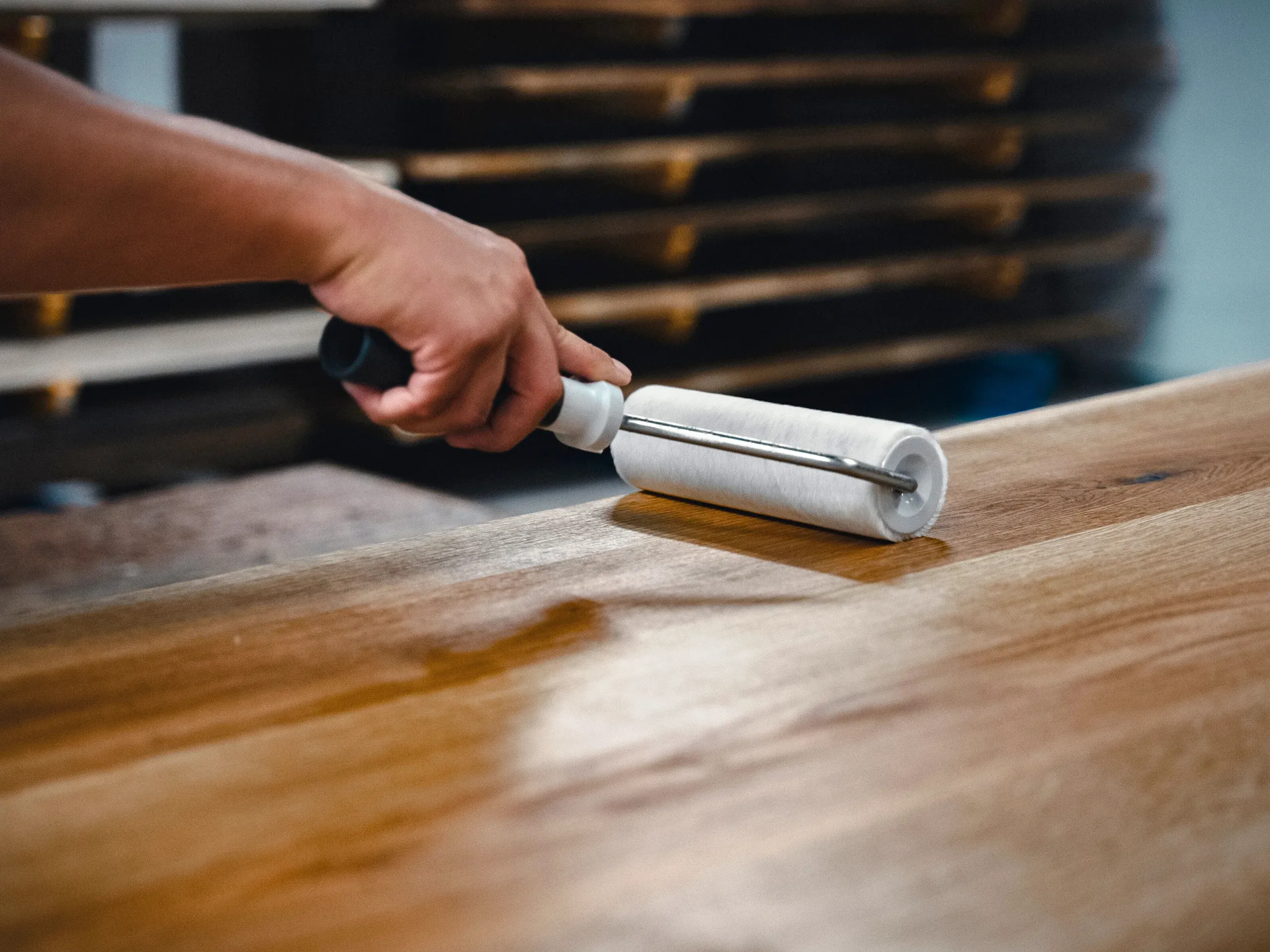
The choice of wood varnish for a table is crucial for achieving optimal results. At VitaDeco, we use the Océanic raw wood varnish Blanchon, recognized for its quality and natural finish. Apply the product using a 18 cm roll to ensure even coverage. Make sure to spread the varnish smoothly without leaving marks. Areas that are difficult to access, such as corners or edges, should be treated with a wide brush for a flawless finish. This product creates a layer Water repellent protector while preserving the natural aesthetic of the wood.
3/ Finishing and drying
For optimal results, it is essential to respect the drying times between each coat of wood varnish for raw wood. Apply three to four layers, with a 4-hour interval between each. This allows the product to penetrate well and harden. This technique ensures long-lasting protection and a smooth finish. ultra-mate, which highlights the wood grain. Make sure to let the table dry for several hours before handling or using it. This drying time ensures proper curing of the varnish.
Which varnish to choose for your dining table?
The choice of varnish is crucial to ensure the durability and aesthetics of your solid wood table. Among the best options, the Océanic raw wood varnish Blanchon is distinguished by its superior quality. This product is particularly suitable for oak tables or in acacia. Indeed, it effectively protects the wood while preserving its natural appearance. Its smooth, ultra-matte finish enhances the wood grain, creating an elegant, water-repellent finish.
This sealer is ideal for dining tables. Why? Because it is stain-resistant, water-resistant, and scratch-resistant, while also being easy to maintain. Furthermore, it applies evenly and dries quickly. It therefore offers a long-lasting protection with a slightly satin finish that retains the raw look of the wood.
If you are looking for an ecological product, the line Rubio Monocoat It offers protective oils. However, for maximum protection, a sealer for dining tables remains the best solution for furniture subjected to intense daily use.
Why trust VitaDeco for finishing your custom table?
Unrivaled artisanal know-how
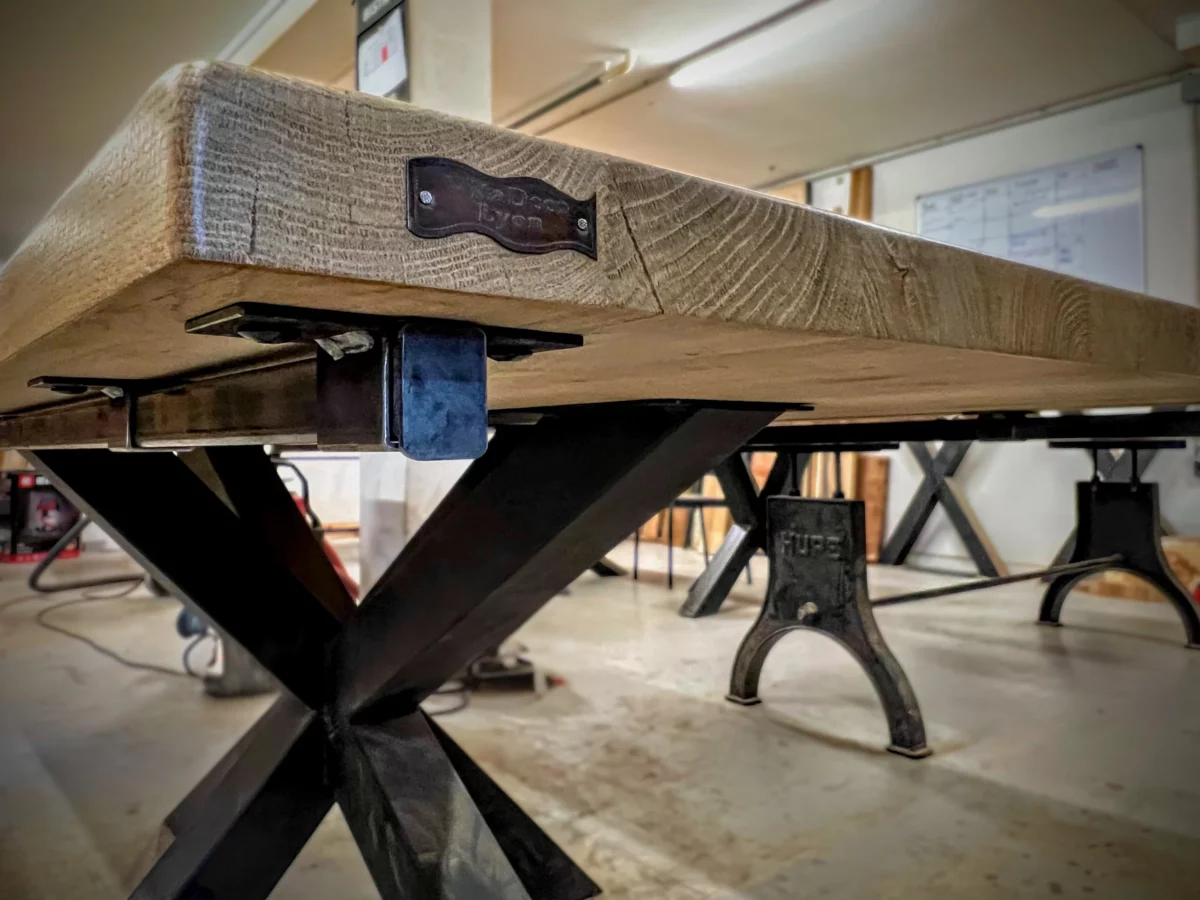
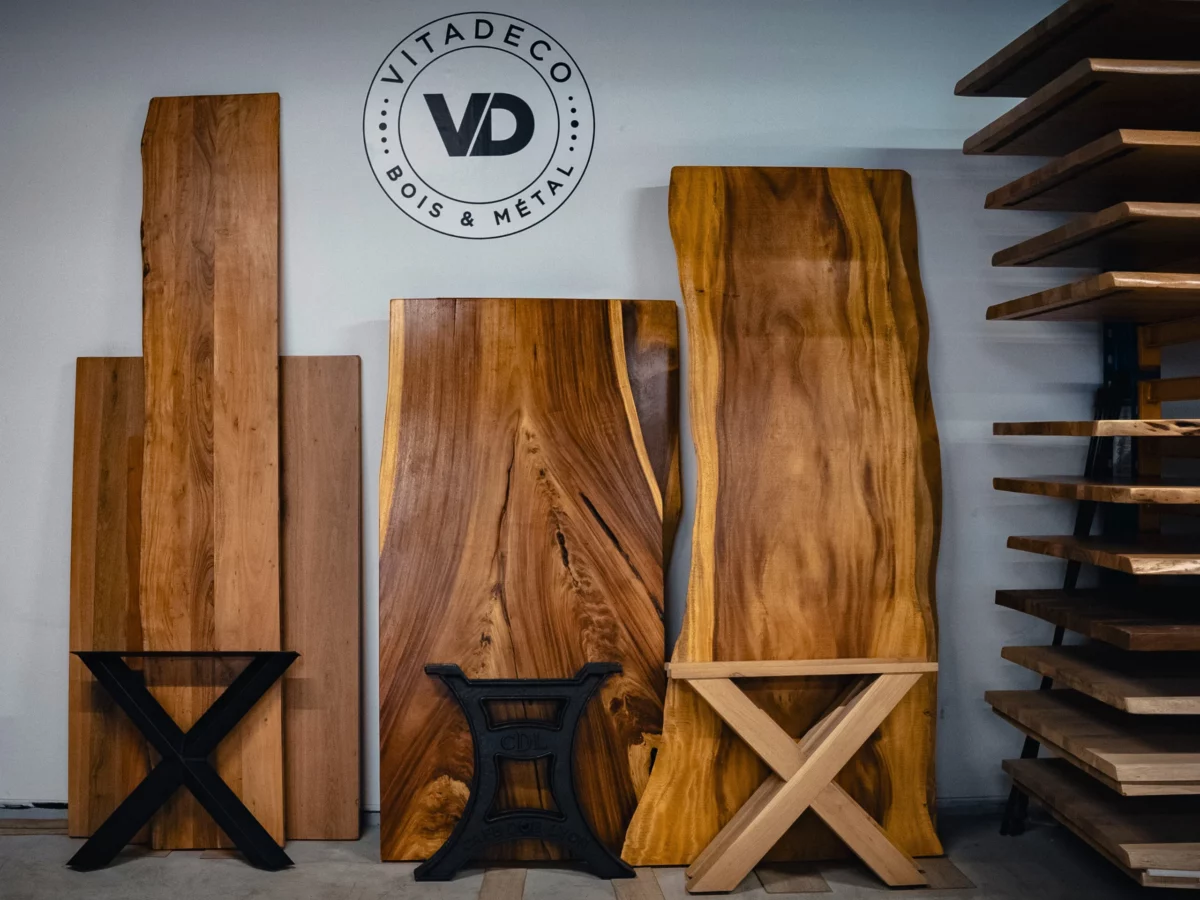
At VitaDeco, we combine know-how artisanal traditional with modern techniques to design unique solid wood tables. Each table is carefully crafted in our workshop. Therefore, we offer finishing options such as varnishing, protective oil, or hard base coat. We take care to preserve the natural beauty of the wood while ensuring long-term durability. Our expertise guarantees custom finishes that meet your expectations in terms of quality and aesthetics.
Customized options tailored to your needs
No matter where you live, VitaDeco allows you to create the custom dining table ideal and have it delivered to you. Our delivery partners are available throughout France. They guarantee that you will receive your solid wood table, ready to be installed in your dining room. Enjoy unique furniture, designed according to your tastes and needs, without having to travel.
Contact us today by mail or phone to make an appointment. Let's discuss your ideas and bring to life the dining table that perfectly matches your space and desires! Also discover the entire VitaDeco universe at Instagram and Facebook.
Hello,
I have a table that is already varnished, but there are some superficial scratches. Can I apply a coat of varnish over the current varnish, or do I need to sand it down completely and start over from scratch?.
Thank you
Hello,
Thank you for your question! 😊
If the scratches are very superficial, it's possible to apply a new layer of varnish over the existing one. However, it's essential to lightly sand the entire surface with fine-grit sandpaper (type 120 to 150) so that the new layer adheres properly. There's no need to sand down to the raw wood, unless the scratches are deep.
Next, dust thoroughly, then apply a thin layer of varnish suitable for the type of wood and the desired finish.
For a truly uniform and long-lasting result, we still recommend lightly sanding the entire surface rather than just a localized touch-up.
Happy renovation!
Hello, congratulations on your website and your answers to questions.
So I'll go ahead and put mine down
I am renovating an old oak table and its two benches. I sanded it except for the tabletop which we sanded.
I'm advised to apply a primer before Whitening Varnish.
What do you think? Or is 3/4 coats of varnish enough?
What are the pros and cons of a hard floor, please?
Thank you for your response
Valerie Beaupertuit
Hello, you can apply a hard base coat, as this provides a good preparation for the wood against UV rays. You will need to apply at least two coats, and you can go up to three for a flawless finish.
I wish you a great renovation! 😉
Hello, congratulations on your website and your answers to questions.
So I'll go ahead and put mine down
I am renovating an old oak table and its two benches. I sanded it except for the tabletop which we sanded.
I'm advised to apply a primer before Whitening Varnish.
What do you think? Or is 3/4 coats of varnish enough?
What are the pros and cons of a hard floor, please?
Thank you for your response
Valerie
Hello,
I'm currently renovating my oak table. The raw look is beautiful, but when I apply the varnish, it becomes too yellow/orange. I chose a matte, non-tinted varnish, though.
Thank you for your advice!
Hello,
Thank you for your message! This is quite a common issue with oak: even with a colorless, matte varnish, the wood tends to warm up its tone when in contact with the product, hence this slightly yellow or orange finish.
Here are some possible solutions:
In summary, if you want to maintain the raw and clear tone of your table, opt for “raw wood effect” or “invisible effect” products.
Feel free to let us know what you choose, it might also help other readers!
Hello, I just made a coffee table top out of chestnut. I have several questions about the finish:
For the finish, the seller advised me to varnish it to protect it. However, the varnish he sold me is a floor varnish (BLANCHON VP polyurethane, silky matte natural wax). Is this product suitable for a table that I will eat on every day?
2) I really like the light color of my table. Will vitrification drastically change its hue? If so, are there alternatives to vitrification?
3) What about tannin migration? The seller told me that products that are supposed to block tannin migration are more or less scams that don't work. How do you handle this issue in your workshops?
Thank you in advance for your advice.
Sincerely
Mathieu BOUTTIER
Hello Mathieu, thank you for your message and congratulations on making your chestnut wood tabletop 👏
Regarding floor varnish: most polyurethane varnishes can indeed be suitable for a table. Just make sure it's indicated as suitable for indirect food contact (this is often the case for products intended for interior surfaces). For everyday use, it's better to stick with finishes designed to resist stains and frequent cleaning.
2️⃣ For the tint: all varnish will tend to lightly sand the wood, even with a matte finish. If you want to preserve the light color as much as possible, you can consider a colorless oil or varnish specifically for furniture. «Raw effect» or «invisible» oils generally preserve the original color better than traditional varnishes.
3️⃣ Regarding tannin runoff: chestnut wood is indeed known for releasing a lot of it. We don't work with this wood ourselves, as it's more difficult to stabilize and less commonly used in contemporary furniture than oak, acacia, or mango wood. We prefer these woods for their reliability and aesthetic appeal. We know that there are «Anti-tannin» primers» supposed to limit the phenomenon, but we are not specialists in this species and cannot guarantee their effectiveness on chestnut trees.
In summary: your product may be suitable, but if you want to best preserve the light shade and limit maintenance, a special furniture oil finish can sometimes be an interesting alternative.
Good luck with your project!
Hello
I am restoring a table with a solid walnut top and 6 solid walnut legs. The legs have been sandblasted and the top sanded (there are still stains like grease that I can't remove; I'm hesitating to use sorrel salt). Is a sealer recommended? The color is not uniform; it ranges from very light to darker. Thank you for your help in guiding me toward a specific product.
Sincerely
Hello,
Thank you for your message and for the trust you are placing in your project.
Here is what I can advise you on vitrifying a solid walnut tray:
Regarding vitrification: yes, it's a possibility, especially if you want maximum protection against stains, wear, or heat.
However
2️⃣ Regarding the non-uniform color: Walnut naturally has variations in shade (light/dark). If you like this variation, it's a plus.
If you wish to harmonize the tone before finishing, additional sanding or a light treatment (e.g., sealer or primer) could help.
3️⃣ Regarding grease stains: before any finishing, it is important that the surface is perfectly clean. Using «sorrel salt» is not a standard recommended method for this type of wood. Prefer: light targeted sanding + gentle degreasing + neutralization + complete drying.
4️⃣ Another option: oil (or hard wax oil) can better preserve the natural look of the wood (visible grain, «living» feel) but offers less protection and requires regular maintenance.
👉 In summary: yes, varnishing can work very well for your solid walnut table. But be aware of the implications: potentially altered color, a more «filmy» finish, and appropriate maintenance.
Beautiful restoration to you!
Hello,
Should I do a light sanding (150-180 grit) between coats?
Thank you
Hello Fabien,
Yes, it's strongly advised 👍
Between two coats of varnish, a light sanding with grit 150 to 180 allows:
– to remove any small raised bumps or wood fibers,
– to ensure better adhesion of the next layer,
– and obtain a smoother, more uniform finish.
A gentle sanding, without pressing, followed by careful dusting, is sufficient before applying the next coat.
Good vitrification 🙂
Hello,
I want to protect kitchen countertops made of merbau as much as possible from water and grease.
Can you confirm that Blanchon floor varnish is suitable?
Thank you in advance for your advice.
Serge
Hello Serge,
Thank you for your message.
Yes, Blanchon wood varnish can be suitable for protecting a merbau countertop, provided you choose a product designed for heavily used surfaces (ideally a high-resistance varnish or one specifically for countertops).
Some important points to keep in mind:
Since merbau is a fairly dense and naturally oily wood, it is also advisable to test on a small area before treating the entire surface.
Good preparation, and don't hesitate if you have any other questions!
Hello, we just sanded a coffee table made of oak and marble. We really like the very light result.
What protective measures to take
So she doesn't get discouraged
Thank you for your response
Hello,
Very nice project, the sanded oak indeed gives a very light and natural finish 👍
To preserve this shade without it darkening, it's important to choose a finish that doesn't yellow the wood.
We advise you instead:
These products protect the table while preserving the natural color of the oak as much as possible after sanding.
To avoid:
If you have any doubts, don't hesitate to test on a small area or a scrap piece of wood before full application.
All the best with your project 🙂